

Developing smart goals is probably the most often talked about topic in my practice.
When talking to clients, they always ask me what the best way is to develop SMART goals that are effective.
In this blog post I’m going to explain what SMART goals are and how to develop SMART goals for optimal effectiveness.
Typical struggles with planning
Many people struggle with developing and more importantly sticking to their goals. Too often we write some of our goals down but then we get disappointed when we don’t achieve them. Other times it’s just a matter of not having the right mindset.
Do you want to learn how not only you can develop amazing goals, but actually achieve them too? Well then read on.
No one wants to waste time with goals that don’t make sense and that’s where the concept of SMART goals comes in.
SMART goals help you become more targeted in your goal setting and help you set a higher bar for personal or team performance.
In the video below – Daryl D. Black goes into the reason why plans don’t work:
Develop SMART Goals to achieve success in every area of your life.
What does SMART stand for?
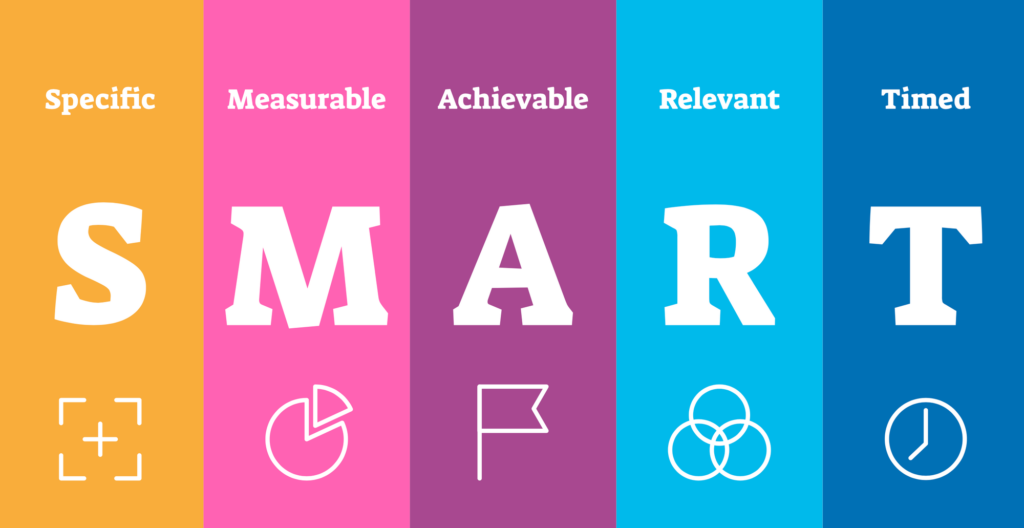
SMART stands for:
- Specific
- Measurable
- Attainable
- Relevant
- Time-bound
Together, these make up a SMART goal. So how do you develop SMART goals?
Specific
To start off with developing SMART goals, let’s start off with the first letter, S, or Specific.

You want to make your goals Specific. If you’re not Specific, then you don’t know what you need to achieve in order to meet your goal.
Being Specific is important so you can identify exactly what your SMART goals should be.
Being Specific means that you know exactly what it is that you need to achieve. Sometimes we can be Specific, but then find out that we weren’t being Specific at all. It will take a few tries before you’re able to perfectly articulate your goal in terms that make sense to you.
For example, you may be a track athlete and you’re training for an upcoming competition.
Now you can train as much as you like, but if that training is not directed at a particular goal, then it’s useless in isolation.
Training without a goal can only lead to failure.
If you were Specific about what you wanted to achieve at that competition, say win first place at the 100m sprint, then you have something to aim towards.
Some questions that can aid in figuring out your Specific goal include:
- What is it that you want to accomplish?
- Why do you want to accomplish this goal?
- Is there anyone else or anything else involved in achieving this goal?
- Do I have all the information available to me to ensure that I know what my goal needs to look like Specifically?
- Can I achieve my goal in my current location, or will I need to travel to another destination?
- Will I need any support to achieve my goal?
Hopefully once you’ve answered these questions you’ll be well on your way to defining a Specific goal and developing a SMART goal yourself.
Measurable
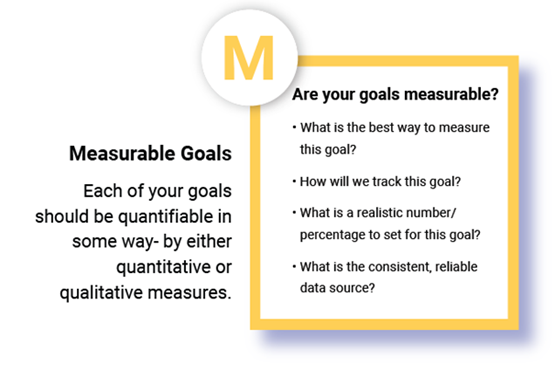
Now that we’ve Specified exactly what our Goal is, the next thing we need to consider when developing a SMART goals is that we need some way to measure our progress against that goal.
I’ve often said that what’s measured gets done, and what gets done gets results.
Let’s use a different example to that of a track athlete above. Let’s imagine you’re a musician and you’re studying for your upcoming music exams.
Practice makes perfect and to be perfect, you need to be able to measure it.
You have to perform three pieces of music perfectly to pass your exam. In order to measure progress against your goal of passing the exam, you might choose to measure your progress against whether you can play each one of the three pieces of music perfectly.
A measurable goal usually answers some or all of the following questions:
- How many?
- How much?
- In what order?
- What is the standard to which I need to achieve my goal?
Once you’ve considered the above questions you can move closer towards developing smart goals.
Attainable
The next feature of a SMART goal is whether that goal is Attainable. This particular feature is key to developing smart goals.
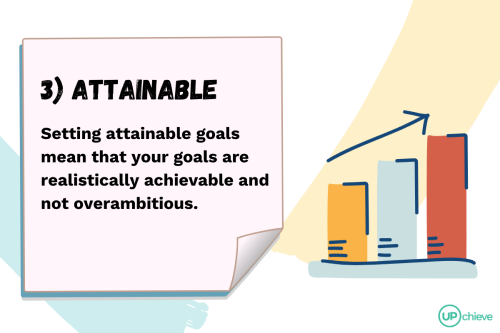
A goal that is Attainable is one that you can actually achieve, if you apply yourself.
Often, it’s helpful to stretch your abilities so you can bring out the best in yourself, and expand your capability. A healthy amount of stress studies have shown, helps in driving peak performance and achieving peak results.
Your goals should test the limits of your capabilities.
A goal that is actually Attainable should stretch you, it should be set in such a way that you will not easily achieve it, after all you want to achieve real results and you want to be the best version of you. Mediocrity need not apply.
You should consider the following questions when deciding whether your goal is Attainable:
- How much will this goal stretch my current capabilities?
- Are there any constraints which may limit my ability to meet the goal? Financial, physical, others?
- Will my achievement of this goal be dependent on factors out of my control?
If you’re able to answer the above questions and you still believe your goal is realistic, then you’re well on your way to developing smart goals.
Relevant
Ok, we’ve got Specific, Meaureable and Attainable aspects covered, now we need to think about making our goal Relevant.
But what do I mean by Relevant?
Relevant means it matters to you. Your goals should be YOUR goals. It’s that simple.
Too often, we try and copy the goals of others when it should be us we should be focusing on.
You want to think about how this goal will help you become a better version of yourself.
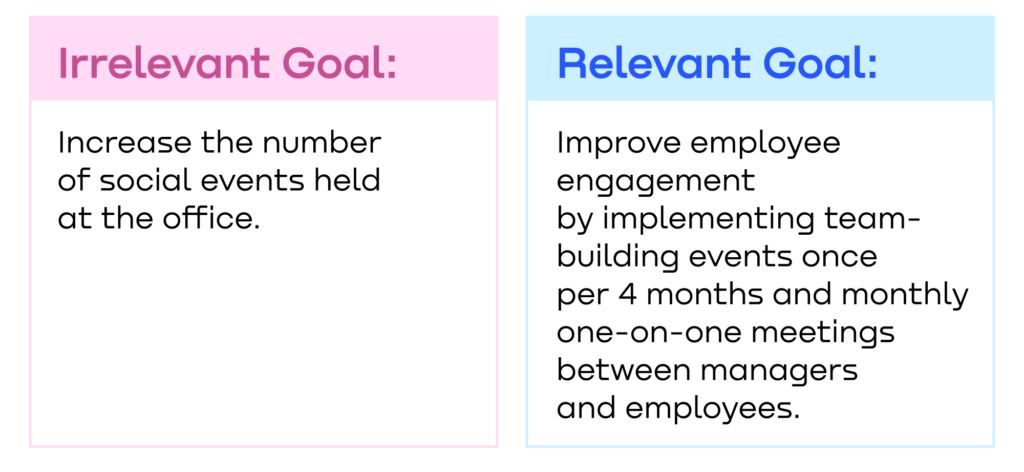
Some questions you can use to test whether your goal is Relevant to you, include:
- How will this goal help me progress towards a larger goal?
- Does this goal matter to me?
- Is it the right time to be achieving this goal?
- Is there another goal I should be focusing on achieving instead?
- Will this goal harm any other areas of my life? My relationships? My career? My well-being?
- Does this goal interact with any of my other goals and if so, do they make sense when put together?
It’s only through asking yourself these questions can you know and conclude that the goal in mind is Relevant to you.
This might be the hardest aspect of the SMART goal concept to get right. It’s relatively easy to tick the other boxes, but the question of Relevance requires deeper contemplation.
Time-bound
Finally, all of your goals should be Time Bound. Goals need a time limit. Just like a game of football, there is a time limit on the time players have to score enough goals to beat the other team and achieve their desired result.
Every goal need to be time bound to be effective.
Goals are no different. Your goals should be defined as being able to be achieved within a certain time frame.
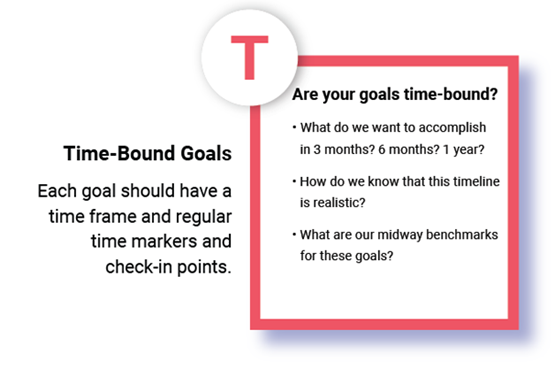
Deadlines are great because they get results. You may find that you have to tweak how you define your deadline for your goal as it’s sometimes hard to estimate what a reasonable time-frame to achieve your goal would be.
Wrapping-up
So we’ve covered what a SMART goal is and how you can develop SMART goals
Remember to always follow the checklist when developing your goals to make sure they are:
- Specific
- Measurable
- Attainable
- Relevant
- Time-Bound
If you got value out of this article, I’d appreciate if you can leave a comment down below and share this article with your networks, friends and family!
Until next time guys, always remember to strive for success in all areas of your life!
Peace,
Craig