


Today’s article is all about how to improve the profitability of your business. Check out this article’s accompanying video below:
Every entrepreneur wants to know how to increase profits within their business.
Too often I’ve seen business owners think they need to do more, to make a meaning change to their businesses bottom line.
This couldn’t be further from the truth. In fact, doing less will help you achieve more. In his book, The Four Hour Work Week, Tim Ferriss argues you should minimise work for work sake, cut out unnecessary tasks to increase your effectiveness and output.
This article was inspired by Tim’s work.
We present three clear cut ways that you can adopt today to improve the chances of increasing profits in your business.
1. The best way to increase profits is to focus on your customer
Focusing on your customer seems so obvious that it is often ignored and what business doesn’t want to focus on their customers?
You’d be surprised to learn that businesses simply ignore the needs of their customers. This is often unintentional and it’s easy to mistake your perception for reality. Check out this McKinsey and Co. article on the importance of businesses focusing on their existing customers.
Experience dictates that change is a constant, business is inherently risky and predicting the future is fraught with danger. However, with all of these challenges, how can we maximise our chances of success?
From a profitability standpoint, we hone-in on our target market and our customer’s needs.
Jeff Bezos is a big proponent of the customer. In fact, in Amazon’s early days, he was famously quoted as saying that he wanted Amazon to be the “world’s most customer centric company.”
Customer needs
Engaging with customers is easy and understanding their needs can be gauged through the following:
- Surveys
- Interviews
- Competitor analysis
- Focus groups
Engaging professionals can reduce the risk that you get this wrong. Delegation to those with more knowledge and skill is a smart business decision. What examples do we have of companies that have managed this well, and equally, poorly?
Well two that spring to mind are Apple and Kodak.
Apple
Apple intimately knows their target markets and demographics. In fact, their competitive advantage is actually understanding their customers behaviour, better than the customers’ themselves.

So good are their insights, they embed understanding of pain points and user behaviour in product features.
In this way, Apple is all knowing.
Arguably, Apple isn’t the only company with this power and insight. Samsung gives them a run for their money, but from a ‘whole of ecosystem’ view, Apple is head and shoulders above the competition.
When they introduced the iPhone in 2007, they took something as simple as the mobile phone and transformed it into a mini-computer in your pocket – effectively positioning it as a gateway to the consumer for advertisers and developers.
So successful was the iPhone that it actually eclipsed the use of laptops and desktops as people’s primary computing device – something that would have been unheard of in the 90s or early 2000s.
What did Apple do?
They identified a need that consumers themselves didn’t even know they had – and then turned that into a product the world now can’t do without. They created a market where there wasn’t one.
Incredible.
Many argue that their innovation started six years earlier with the iPod. This device changed the way people listened to music.
Apple cleverly marketed the benefits of the iPod. Instead of spruiking the storage capacity of the device in gigabytes, a niche technical term only those familiar with technology would know, they told customers how many songs it could hold.
In a genius marketing move, they immediately and exponentially increased their total addressable market by simplifying the message.
Kodak
On the other end of the spectrum, we have Kodak.
Kodak was a behemoth in the photography industry, from its founding in the late 1880s.
They enjoyed decades of innovation and technological advances with the invention of new cameras and imaging technology.
George Eastman, the company’s founder, wanted to democratise photography. He achieved this by making it accessible to everyone, with ease of taking a photo and then printing it.
Since inception, Kodak employed the razor and blade model as its core product strategy.
This is where an item is sold at a low price (potentially a loss – otherwise known as a loss leader) in order to increase the sales of a secondary or complimentary good.
Kodak sold cheap and affordable cameras and made their money on printing photographs on film customers would send to Kodak’s own processing and printing labs.
Their downfall came when the imaging industry was shifting to digital technologies in the 1980s. While Kodak adopted digital within its business, it was too little too late.
The market was calling out for digital products, but Kodak didn’t respond soon enough. They doubled down on printing as their way to generate profits, selling expensive printers and inexpensive ink, while their competitors sold inexpensive printers and expensive ink.
The nail in the coffin was the advent of digital cameras. Curiously Kodak purchased a photo sharing site Ofoto in 2001, and instead of focusing on the Instagram model of sharing photos digitally, they used it to funnel customers to printing digital images.
This proved fatal for Kodak. The company didn’t listen to the needs of their customers and ironically, while Facebook acquired Instagram for $1bn in 2012, Kodak filed for bankruptcy in the same year.
2. Improving internal processes is an easy way to increase profits
Improving your internal processes is a really easy way to increase profitability as a business.
Processes are the one thing that can make or break your profitability. Whether you sell goods or services. It’s often the difference between achieving profitability, or not.
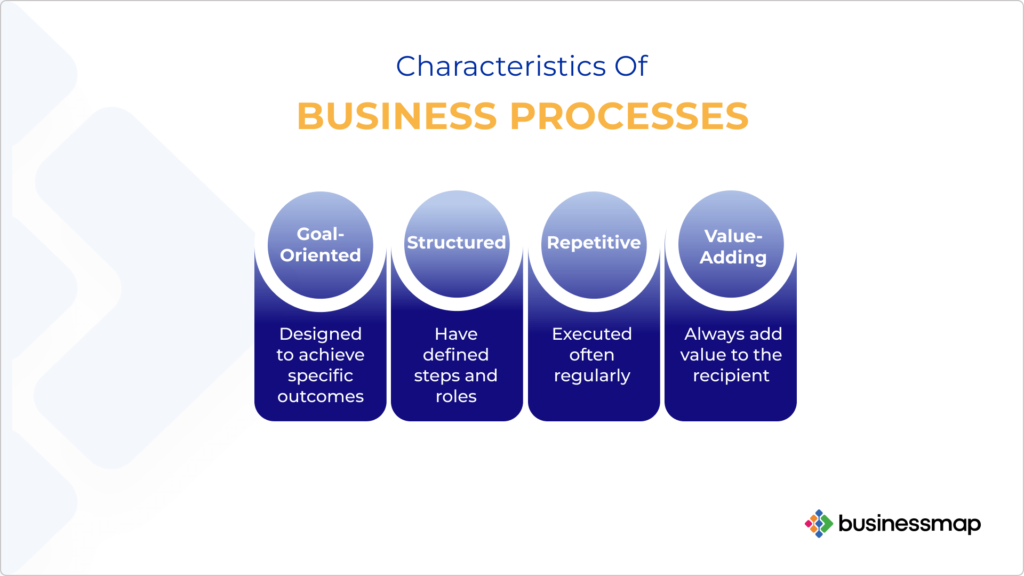
Regardless of the business you’re in, everyone wants to have a profitable business. If you’re in the business of selling supplements to the fitness industry, you want to make sure you sell as much of your product to as many customers as possible, to maximise your revenue and profits.
If you’re unable to ship your products, you can’t generate revenue. If you can’t generate revenue, you don’t make a profit. Your ability to generate cash is compromised.
A breakdown of internal processes and systems can hamper an otherwise successful business.
Often, performance is dictated by the lowest common denominator in a system. If something is not up to scratch in your business, it will be the rate limited step to you generating profits.
If customer orders go missing, or you can’t reconcile and capture sales, then it’s no use trying to grow. Your business won’t be able to keep up.
Doing less often means achieving more. Instead of focusing on increasing sales to all customers, select the customers that you want to do business with.
Saying no is often more powerful and profitable than saying yes. Dealing with a problem customer, clogs your process and workflows and the benefit-cost trade off for incremental profit is usually not worth the effort.
Similarly, if employees don’t have clear instructions, the become ineffective and waste precious time and resources fixing things that could have been solved with clearer instructions.
Empowering employees to make decisions often has a similar effect. It’s surprising how one’s IQ jumps when they’re given enough rope to make decisions and not micromanaged.
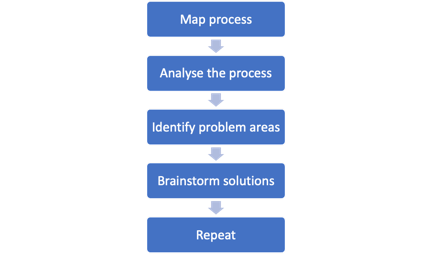
It’s easy to diagnose process problems in your business. I use the following process-flow, but you can adapt it to suit your needs:
3. Refining your brand’s purpose can also improve profits
Finally, refining your brand’s purpose helps with your market positioning. Brands that have a clear mission statement resonate easily with their target market and enjoy higher profitability and greater market share.
What is a brand purpose? Put simply, it’s your reason for existence. Your purpose should reflect your value proposition clearly, and be clear to your customers.
Tesla’s brand purpose is clear. When people think of sustainability and transport, they think of Elon Musk and what Tesla brings to the market through their electric vehicles.

Likewise, you need to ensure your brand’s image and purpose are easily identifiable by your target market.
If you haven’t defined yours, here are some simple steps:
Understand who your target customer is and create a buyer persona
Doing this allows you to get into the minds of your customer. Things you want to define include:
- Who they are and key demographics (age, sex, location etc.)
- What their interests are
- Their biggest challenges
- The problem that your product solves
Ask – what problem does your company solve?
This is critical to define. Companies that try and solve too many problems typically go out of business very quickly. You want your focus to be razor sharp, solve for one or two main problems. Any more are complimentary.
If you sell coaching services, focus on one or two key areas to coach. As a fitness coach for example, niche down on specific areas: diet, wellbeing, strength conditioning etc. Don’t try and do them all.
You’ll find that focusing on specific problems will increase perceived value to your target market and will grow, not shrink your market.
3. Communicate consistently with your target market
Communicating your brand’s purpose is key. Don’t leave it to chance. When you leave things open to interpretation, you run the risk of wasting limited opportunities to convert leads into sales.
Be clear in your messaging, saying less says more about you and your business. The days of verbose communication are long gone, we’re all time poor so get to the point.
Focusing on a few marketing channels is a good idea. Target your messaging through social media channels such as:
- TikTok
- YouTube
You’d be surprised to understand the spread of your customers across these channels.
Don’t forget traditional media either:
- Radio
- Television
- Newspapers
- Magazines
- Journals
Conclusion
Hopefully this article has given you a few tips on how to improve profits in your business. Remember the three key points:
- Focus on your customer
- Improve your processes
- Refine your brand’s purpose
Let us know what you thought about this article by leaving a constructive comment below.
Until next time, here’s to your success.
Craig