
It’s 2026, and it’s no secret that we all use Artificial Intelligence (AI) in some way, shape or form. In fact, it was not long ago that AI made its prime-time debut with ChatGPT coming onto the scene in 2023. It’s become a household since then. Since then, its use has been parabolic, with millions of people signing up for free accounts, and even competitors from other Big Tech companies offering their own versions of AI chatbots. Access to this technology is ubiquitous and there’s a low barrier to entry for people using it.
But is this all good and what does this mean about the way that we use the technology? When the internet came to prominence in the mid 90s, it was heralded as an amazing technology. In many ways it was. It enabled the world to connect in a way that just wasn’t possible before.
I believe that AI provides that same opportunity, but what do we need to think about if we want to use it for good to help improve the quality of our lives, our careers and wealth?
In this post, I’ll provide my view on how AI can be used for good. I really believe there’s an overwhelmingly positive use case for this technology. However, and this is a big BUT – we must be wary of the risks and trade-offs that come with widespread adoption.
1. The rise of AI
While the version of AI has only existed for a few years, ‘artificial intelligence’ is not new. We’ve been using AI in some form since computers were invented. AI is just the code that runs on computers. The code responds to the users input. However, not all code is created equal.
The first computer applications were essentially just calculators. They allowed you to input a number, or a string of numbers, into a computer and calculate a result. Software programs have come a long way since then. If you’re old enough, you’ll remember the days when there were only command-line interfaces for operating systems – such as DOS (Disk Operating System).
Then came the Apple Macintosh, which heralded the introduction of the graphical user interface, where for the first time, users were presented with a visual representation of all the computers’ commands. Then Windows 3.1 was released, which paved the way for Microsoft to release Windows 95 that cemented it as the premier consumer operating system in the mid-90s. Now software is so advanced that you can run complex programs that help you develop music, edit videos and create virtual worlds through video games and virtual reality.
Leapfrog to the 2020s, and software has gotten to the stage where it can write itself. AI programs like ChatGPT and Anthropic’s Claude, Google’s Gemini, and xAI’s Grok, can essentially write complex computer programs with just a simple user text input. That’s how incredibly advanced the technology has become, basically allowing us to generate new content, thoughts and ideas from scratch.
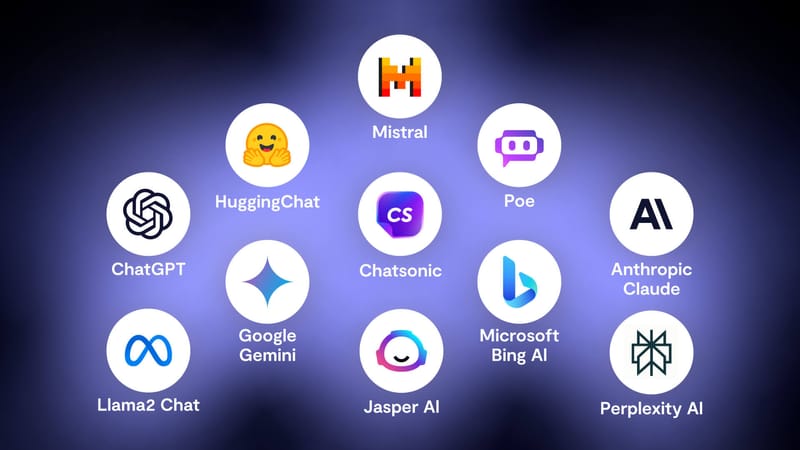
There are new AI products also being released to market every day, with some able to generate a feature length Hollywood-style movie in a matter of minutes – the technology’s progress has been immense!
So how does AI work?
It works by essentially taking a human language prompt and turning them into what’s called ‘Tokens’. The AI then transforms this into a complex series of calculations using ‘matrix multiplication’. The process uses machine learning, statistical techniques and smart coding to figure out the most likely string of sentences that would both convert that code into context, and then into a response that makes sense to a human.
It does this incredibly fast using GPUs, or General Processing Units – which are just computers that can run billions of calculations every second very quickly. This is different from a CPU – or Central Processing Unit which computes things sequentially (not in parallel). This is why GPUs used for gaming are incredibly popular when it comes to AI workloads because they are very efficient and effective at matrix multiplication – essentially performing lots of calculations in parallel.
2. Using AI to help level up your career
2.1 – Getting ahead of the curve with AI
So let’s start by talking about how you can get ahead of the AI curve with your career.
It doesn’t matter what your line of work is, AI is being adopted in your chosen field, even if it’s not been talked about or publicised. Even in fields where the work done manually, like construction or the trades, people are finding ways to leverage AI to add intelligence to their tasks and working both harder and smarter.
However, there’s one trade-off that I think we should never make; and that’s to outsource your thinking to AI. This is so common now that I’ve seen countless people do it online and it’s one of the easiest things to spot.
This is especially prevalent on social media platforms like LinkedIn, where people are blatantly copying and pasting entire posts that an AI chatbot has written for them, without any editing or ‘humanising’. I think this cheapens the message, damage’s the authors credibility and most importantly dehumanises their message. It also makes people incredibly lazy and its not a good look.
However, AI is great at helping you craft the outline to a post, and where you feed it a specific prompt and then it responds with something targeted and focused. In fact, it’s amazing how quickly it can respond to something using very little contextual information. This strength is also its greatest downside, as it often hallucinates – and we’ve all seen examples of this where AI chatbots make up information, and in an academic setting just creates academic sources that don’t exist.
Those who use AI effectively then, are excellent ‘prompt engineers’. Your job when you use AI, is to give it a rich and specific prompt, with adequate context – so you get a tailored, focused and accurate answer at the other end.
2.2 – Will AI will take our jobs?
Well I think AI will help enhance the majority of jobs, and perhaps it will make obsolete some things that we currently do – like generating an analysis of financials, in the sense that it will make it easier to do the things that we already do.
And this is the nuance that’s misunderstood in today’s conversation about Artificial Intelligence. There’s this notion that AI will take over what we do, and then we’ll all be unemployed. If you think about it, how can this make sense?
If everyone was unemployed, who would buy the goods and services that AI produces? And by extension, the marginal cost of producing those goods and services would essentially go towards zero as for any producer to make those things available, it would need to be ‘profitable’.
2.3 – Using AI to level up your career
I’ve been experimenting with AI to create custom short courses on topics that I want to go deep on. This is incredibly handy as you can use it as your personal tutor to help learn a new skill or knowledge about a topic that’s useful for your job.
I’ve also been using AI to learn about things outside my career. For example, just the other day I asked AI to create a learning outline for AI Agents with the assumption that I know nothing about them, and to make the learning curve gradual.
The result is that I now have a four-week course that will teach me everything I need to know about AI Agents, and is tailored to my current skill level and knowledge level. This is the great advantage of AI – you can essentially use it to tailor a learning package, or teach you something that is customised to meet you where you’re at in your career.
3. Using AI to level up your wealth
If you’re a reader of this blog, you’ll know that I’m passionate about building wealth, business and money management. AI has many use cases for these subjects. Not only can you use it to quickly come up to speed with many financial or personal finance topics, but you can also use it to create specific tools that can help you to manage your money and wealth better and more effectively.
An example that I always like to use is that I’ve been toying around with tools like Replit, Lovable.dev and Figma to create web applications using AI. These apps – commonly called Vibe Coding applications, essentially allow you to create software applications from just telling the AI what you want it to create.
I recently built an app that helps me track the finances on my investment properties, and I must say, this is better than anything that I could create myself using Excel, or tools that I’ve found out on the market. The benefit is that the tool I create is customised to my needs, and I don’t need to pay someone else to develop it for me.
I was absolutely amazed when I tried it for the first time. However, we are just in the infancy of this tech revolution and not even a fraction of the world’s population is using AI, let alone using apps like Replit to create their own custom applications.
I’m excited to see how much further I can take the apps that I create, and potentially find a way to not only use them for my own use case, but also to find a way to monetise them so that I can help to build my business
By helping people get what they want, I’ll be able to build my wealth. Now that’s something worth investing in.
4. Implications for using AI on a daily basis
So we’ve talked about the rise of AI and how we can use it to help increase the success we have in our daily lives when it comes to personal finance and our career – but what does this all mean?
The key takeaway for me is that we must continue to learn how to leverage Artificial Intelligence no matter where we are in life. It doesn’t matter if you’re in your teens, or in your 70s. AI is here to stay and our worlds will forever change in the way we use this technology to improve our lives.
It’s incumbent upon us to ensure that we take the time to not just learn about it, but do so in a safe and effective way. The biggest risk in my opinion is that we become so reliant on it that it replaces the way we think as humans, and we end up being just copies of each other.
4.1 Risks
So what are the risks of AI, well these are well known but here are the key ones for me.
4.1.1 – AI replaces our humanity
Firstly, I think the greatest risk is that AI replaces our humanity, and in the process we just become so reliant on it that we forget how to think critically – like the ancients used to. I remember when I was on my recent trip to Europe and the opportunity to see so many wonderful sights and national treasures.
To think that people before us were able to come up with such magnificient structures and works of art with relatively primitive technology (by today’s standards) is mind boggling. I mean just think about the genius it would have taken to sculpt Michelangelo’s David, or paint Da Vinci’s Mona Lisa, or build the Collosseum.
These are priceless artefacts of human civilisation and something that humans created without AI or technology. Mind you, they did leverage the science and tools of the time to do so, but I suppose the point is that they still had to use their original thought and thinking to be able to come up with the designs and the structure.
4.1.2 – Original information and journalism is lost
Another risk is that AI perpetuates misinformation – not in the way that it creates it itself, but it is used by not well meaning people to spread information in a malicious way. Now people acting criminally is not new, and crime will continue well into the future as people are people, however AI can become a vessel for this to perpetuate with ease.
4.1.3 – AI used as a threat vector
I was just reading recently about people using Claude Bot to backdoor into MacOS by disabling an important security layer within the operating system. Something like this raises critical security risks and vulnerabilities with people’s personal information and data which can be easily taken by nefarious actors if the use of AI for this sort of use goes unchecked.
It’s incumbent upon the industry, and users of AI to ensure they fully understand the technology in their day to day use cases. AI is an incredibly opportunity, but we must fully understand what and how it can be used to ensure we can do so safely.
4.1.4 – We go to a place we can never come back from
Finally, I think the other big risk of AI adoption is that it actually takes a place from where we can’t come back from. Similar to the internet boom and the rise of social media, AI can make us incredibly connected and allow us to do things we could have never thought possible even 10 years ago.
However, we must be willing to ask ourselves if we want this version of the future. It wasn’t that long ago that we didn’t have the marvel of the mobile phone, or the internet for that matter.
But for every advancement in technology, comes some downside – even if majority counteracted by the benefits. Looking at social media, I think one downside has been the fact that while it’s made it incredibly easy to connect with others, it’s made us less personable.
Gone are the days were people used to just call each other, or drop into each others’ houses. In some ways it’s made it easier to keep in touch, but it’s typically now behind a screen – and sometimes having that face to face connection is something that you would never want to replace if you can help it.
4.2 Opportunities
5. Wrapping Up
I think that each of us is unique and we each have something unique to bring to the world and the people around us. AI should be used to ensure that we can do that most effectively – but we need to come up with some principles about how we will make that happen.
Otherwise, I believe that we’ll lose sight of the greatest invention of this century – and that’s not something that I think anyone wants to happen.