


We rely on our skills more than we realise
We all have skills and a skill set that we rely on for our day to day life, and our careers.
However, have you ever stopped to think about the fact that keeping your skills up to date is something that you may not consciously do to help improve your ability?
Competency is one of the things that’s incredibly important, especially when it comes to developing your career, going for that promotion at work and helping your family when they need you – especially if they rely on you or you’re a carer for someone near and dear to you.
Check out my video blog on this post!
Skills deteriorate when you don’t use them
When we don’t keep using our skillsets, they atrophy. That is to say, they deteriorate without use.
This is a bit of a problem. We must keep using our skills for the betterment of our careers and our general day to day lives.

The hidden cost of letting skills atrophy
For example, say you write for a living. If you go a month or two without writing, then that skill won’t get exercised, and if you pick up a pen again, you may not be able to write with the same proficiency as before you stopped.
In the same way your skills such as being able to present, or talk to a room without feeling fear will wane if you don’t find avenues to exercise this ability.
What I’ve been doing to overcome this
I’ve been working on ways to help mitigate this issue, especially as my soft skills are required as part of my role as a consultant and advisor.

One thing that really helps is keeping this blog updated, and writing articles capturing my thoughts and ideas.
Check out my other blog post on why you should keep going, even when you’re running on empty.
Writing faces clear thinking and boosts your skills
I think if I didn’t take the initiative to start this blog, and write down my thoughts I would find it a lot harder to actually capture and document what I’m thinking.

Another benefit to writing down your ideas is that it makes you a better thinker. Writing helps you structure your thinking and form coherent ideas that you can then communicate to others.
In my role, I need to be able to write to be convincing and get my points across in the most efficient manner.
Rambling, or not getting to the point would be detrimental to my goal to ensure my clients and readers can get the most value out of what I produce.
This takes the form of reports and slide decks, and being able to succinctly convey information simply is a real skillset.
Turning complex ideas into a simple message is a hidden skill
It’s not easy. How do you take complex ideas and convey it in a way that it’s easy for someone with little knowledge to understand?
Well I’ll tell you that I didn’t come out of university with this skill. It took me many years before I was even remotely proficient and could effectively report together that would make sense from top to bottom.
But I’m proud of my progress. However, I know that I have more to work on.
Informal vs formal skill development
There are many different ways you can improve your skills. The informal way and the more formal way
Let’s start with the informal way – what does this entail? Well informal learning and skill development happens incidentally. It could happen on the job with ‘on the job training’, or it could occur when you just perform a task, like having to write a letter to get out of a parking fine (assuming that writing is a skillset that you use day to day).

Formal skill development is more structured. This takes the form of structured courses (or short courses) where you formally enrol in a program and subscribe to classes and practicals to help sharpen and improve your skillset.
Why both learning styles matter
Well, it depends. I think both have a place when it comes to improving your skillset, and there’s a time and a place for both.
I strongly believe that we should be finding every opportunity to learn and grow our skillsets. Whether that be on the job, or just trying something new out.
For example, you might decided to create a short LinkedIn post to help improve your ability to write, or to convey something really interesting about an important topic in your industry.
It doesn’t matter what it is as long as you’re doing something to better yourself and your skillset everyday.
Teaching is the fastest way to truly learn
There are even more way to grow, and that is primarily to teach. The act of teaching helps reinforce the concepts you already know and cements them in your mind, making them second nature.
If you think you already understand a topic, you don’t really understand it until you begin teaching it to others.

I remember when I was at University and I was a tutor for high school kids who wanted help with their maths or English homework. I would sit down with them and teach them what was to me at the time, really basics concepts like multiplication or algebra.
And the act of teaching that to them took my understanding to the next level.
Thinking from first principles in a complex world – a real world skill
In fact it made me think not just in formulas or rote learning things and committing them to memory, but it enable me to solve problems from first principles.
That’s a rare skill nowdays. Solving things when you don’t have a defined way of getting to the solution, or where the specific solution isn’t known is something that’s highly rewarded in today’s economy.
You just have to have a look at what Elon Musk is doing with solving so many previously unsolvable problem
- Self driving cars
- Putting rockets on Mars
- Building lightning fast satellite internet communications
- Tunnelling deep underground
Check out Elon Musk’s biography by Walter Issacson here.

Who would have even imagined that this would be possible even 50 years ago?
That’s the power of being able to solve problems from first principles.
Wrapping up – commit to getting better every day
So what should you do? Well you should accelerate your development and get to action. There’s no greater teacher than failure. So fail fast, and learn fast. Iterate and then go again.
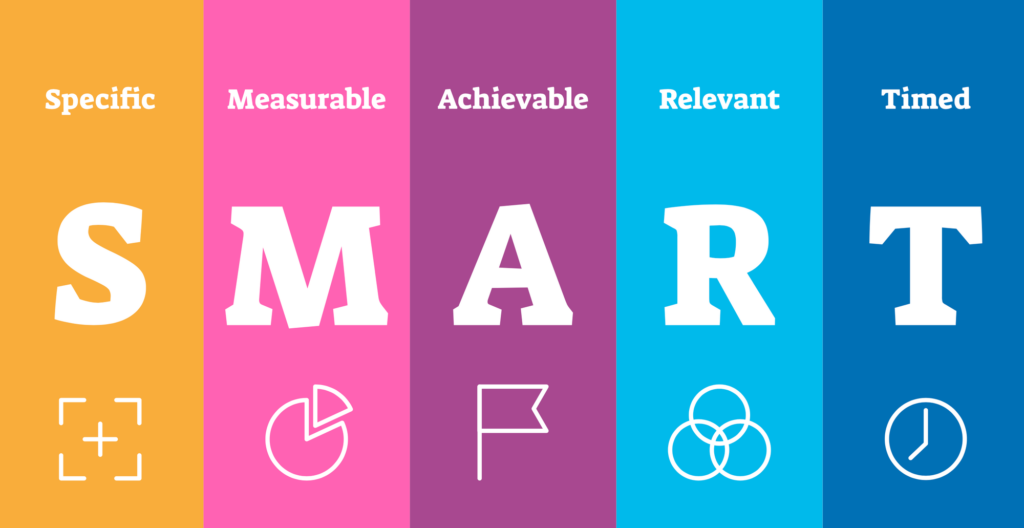
Pro Tip: If you want to get better about setting SMART goals – then check out my detailed article on SMART goals here.
Make the commitment to success, and to getting better with each passing day. After all, every day you waste is another day that stands between you and your goal.